Aural Tools

Transducer

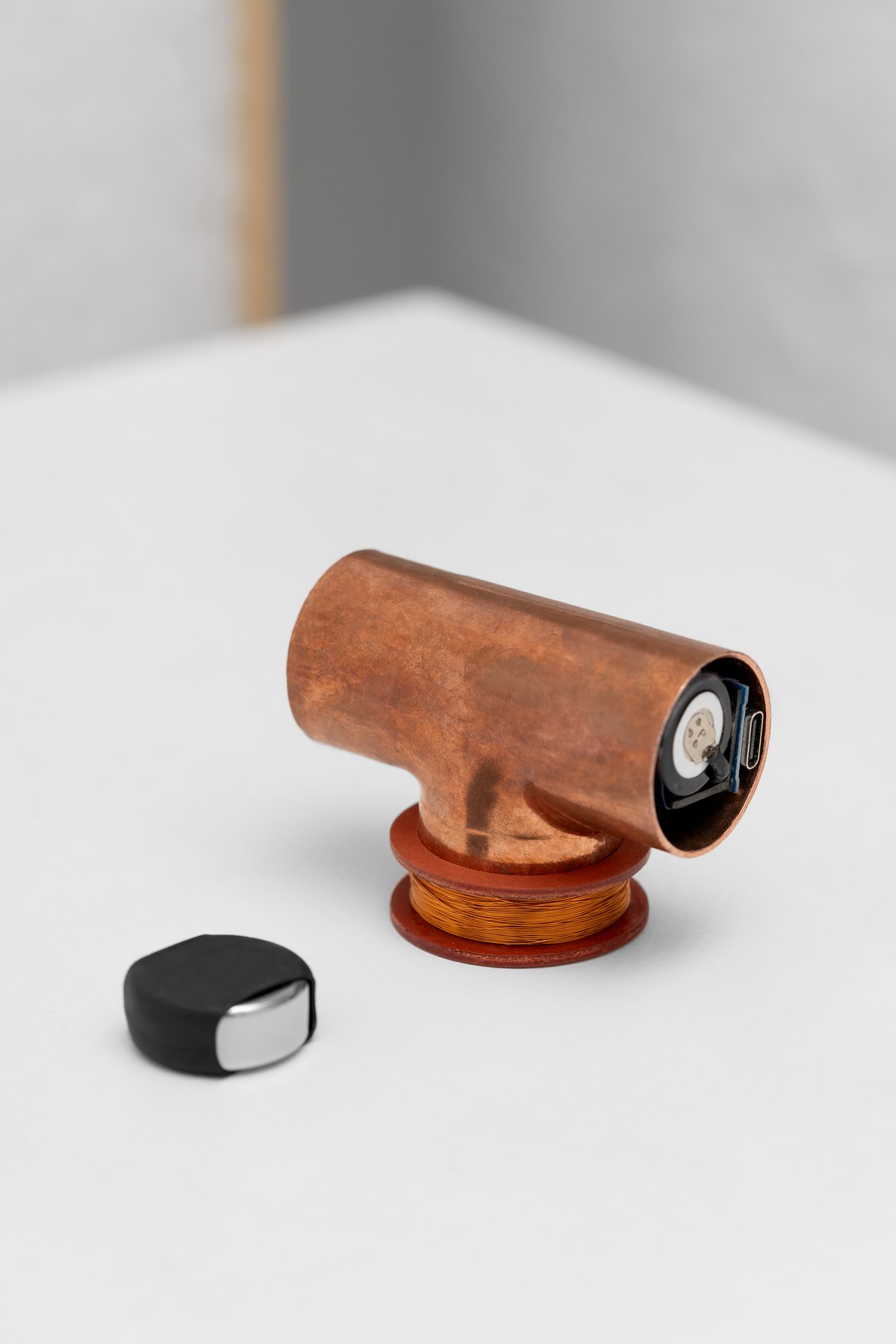
Transducer, copper audio transducer with magnet.
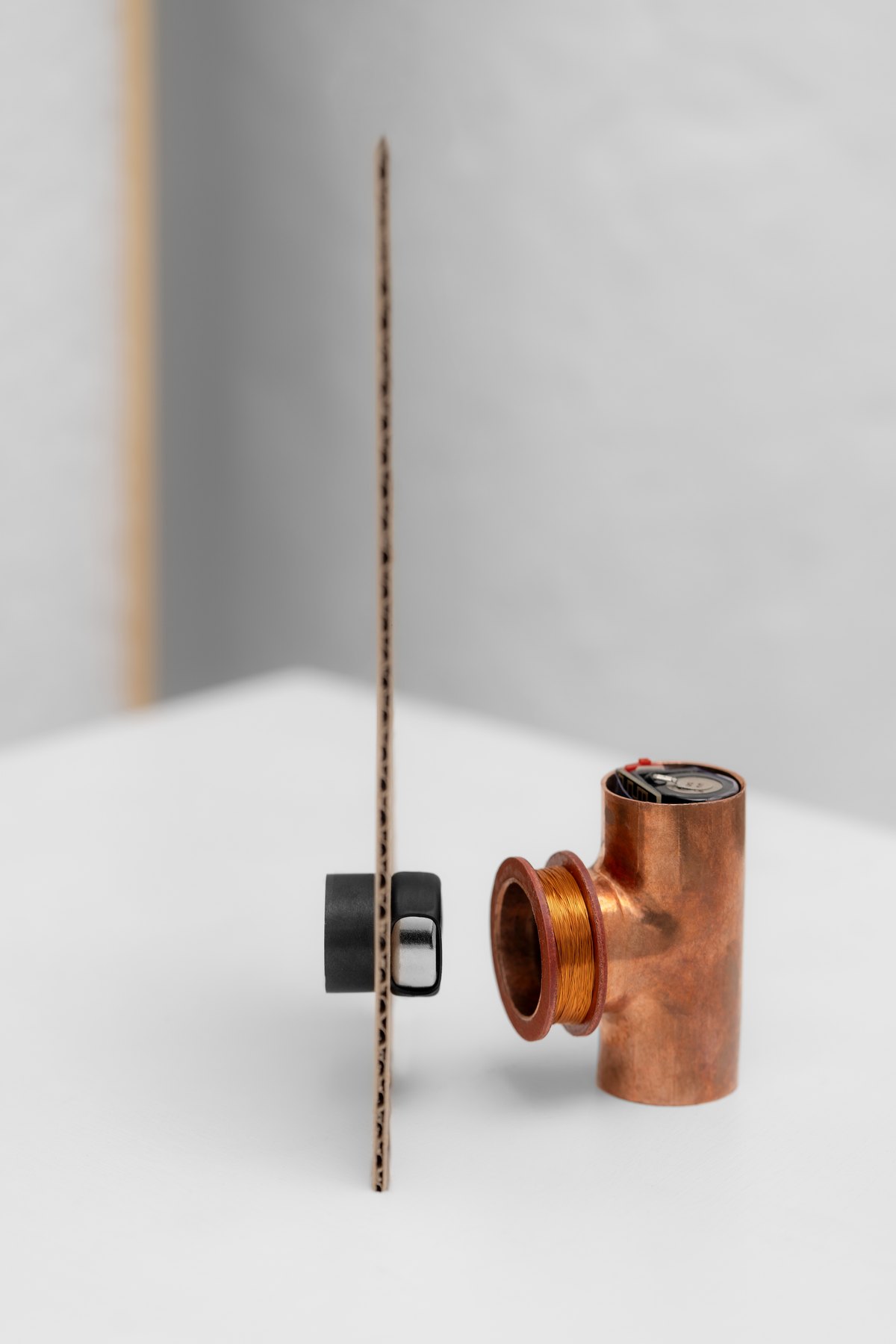
Transducer, detail of the copper coil, magnet and connecting element.

Transducer is a handheld vibration device developed with sound artist Felicity Mangan, drawing on her interest in vibrational communication among insects. It consists of a copper plumbing tee, which receives sound via Bluetooth, and a pair of magnets to attach to a surface, such as a cardboard box or a window. Brought close to the magnets, the tee makes the surface vibrate: with music, the material becomes a loudspeaker; with very low tones, the vibration is felt rather than heard.

Read moreClose
When I first saw Felicity perform, she had put together a peculiar makeshift PA: an MP3 player, a car audio amplifier, and a copper coil around a cardboard box clamped between magnets, which turned the box into a loudspeaker.

This setup came from her fascination with how insects communicate. Many of them drum, tap or vibrate their bodies against a leaf, a stem or the ground, and sense these vibrations through their legs. Since plants are also shaken by wind and rain, these signals are elaborate, recognisable rhythmic patterns, which biotremology has only recently begun to study.

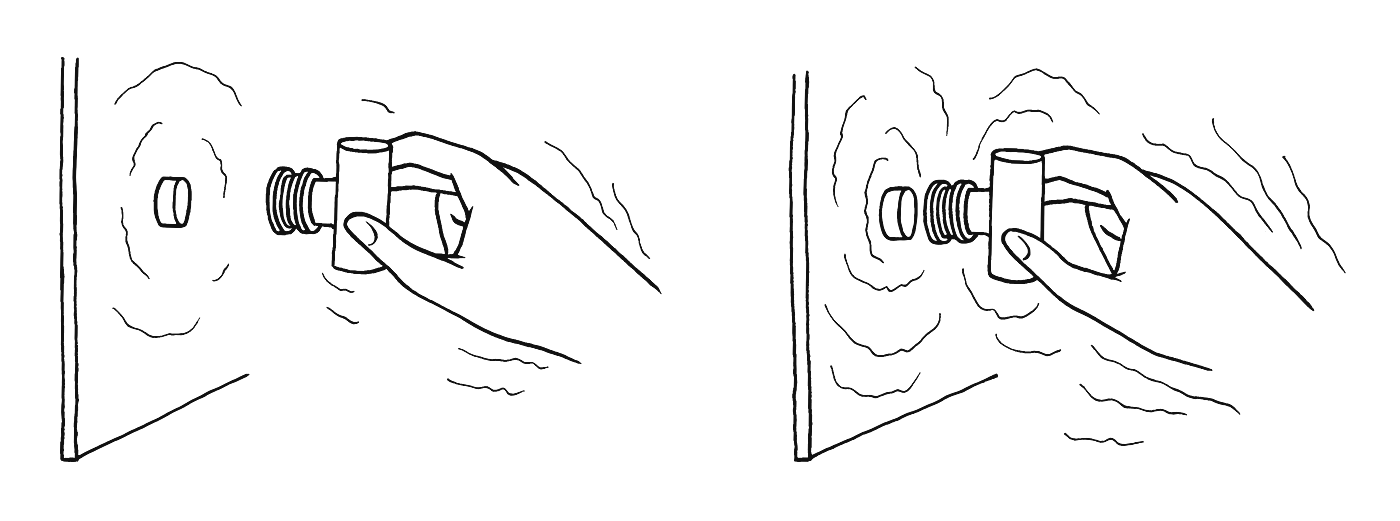
Transducer rebuilds Felicity’s DIY system as a self-contained object. The copper tee houses a Bluetooth receiver and a battery, with a coil of copper wire wound around its base, in plain view. Volume is adjusted physically, by moving the tee closer to or further from the magnets, and the tee sets both the material and the hand holding it into vibration. Against a rigid surface it is mostly the hand that moves; lighter materials start to shake as well.

We liked that copper changes colour with time: an electronic device that reacts with air and water, behaving a bit like something organic. And unlike plastic, it warms up, through heat from the user’s hand and the electromagnetic action of the coil.

Drawing by Mattia Pajè from the instructions of Transducer: a hand moving the coil towards the magnet placed on a surface.

Comes with printed sheets containing an introductory text and instructions, with drawings by Mattia Pajè.

Developed during a residency at Pianpicollo Selvatico, which also funded the first production run with the support of Fondazione Cassa di Risparmio di Cuneo and Regione Piemonte.