Enrico once noticed that his footsteps, on the wooden floors of his old flat in Cesena, made the small containers on a kitchen trolley rattle. Each one oscillated slightly, touching the others for a split second, and together they formed a shifting polyrhythmic texture. He then began placing a stone or a bowl on his snare drum and playing it with sticks: the objects vibrated in their own way, yet all of them followed the drumhead.
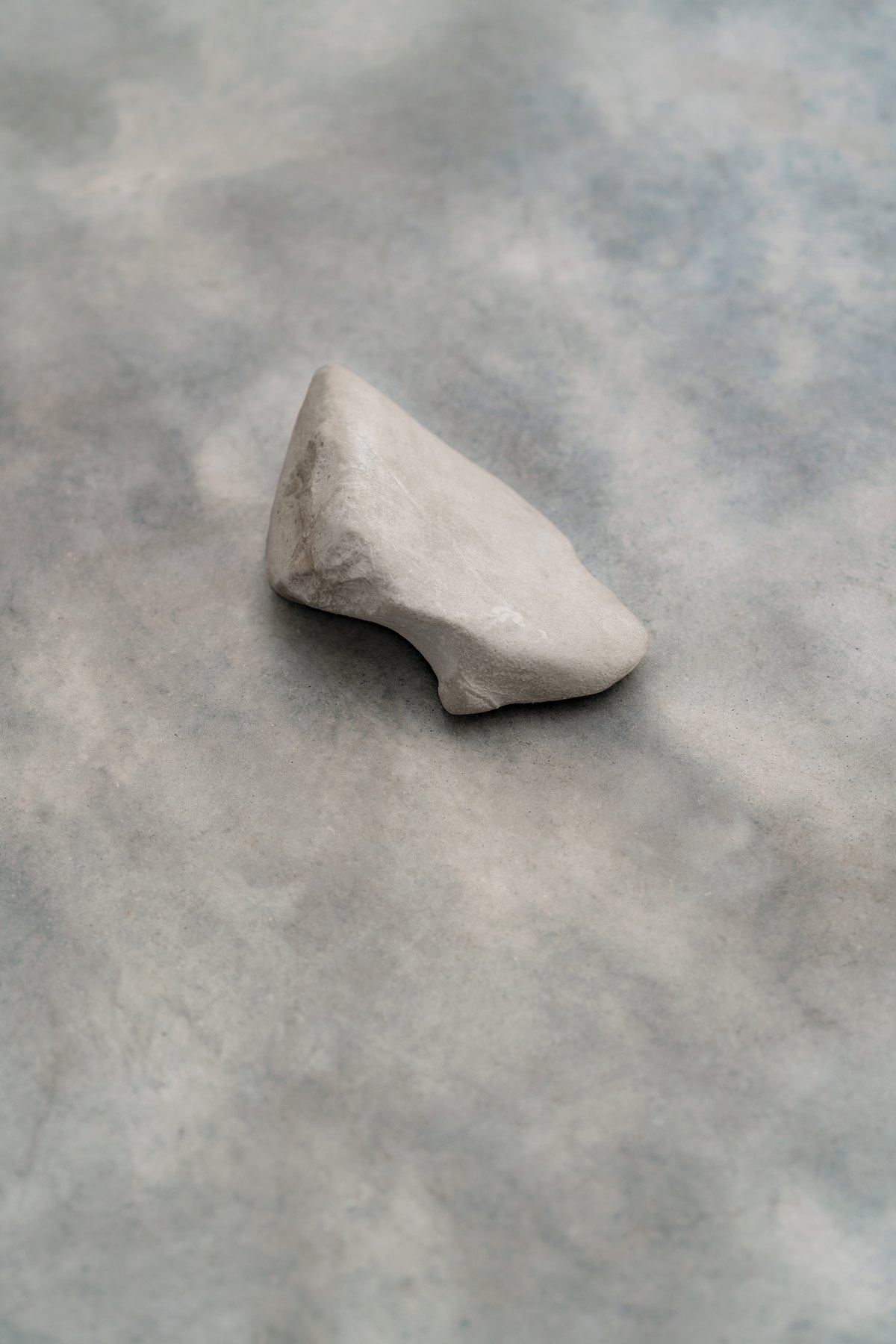
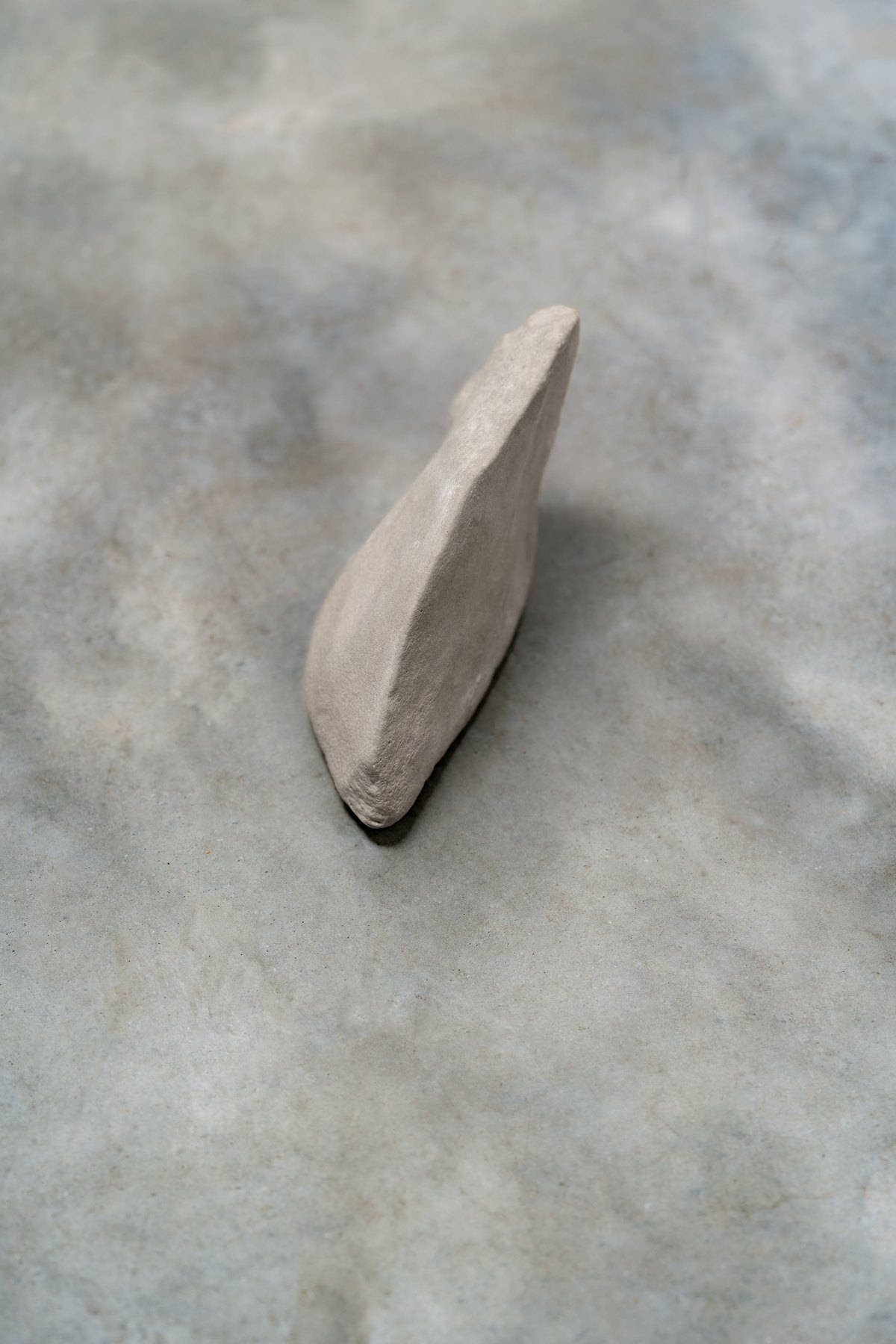
We developed Pietra di Langa during a residency at Pianpicollo Selvatico, walking the surrounding fields and paths in search of a stone to reproduce. Some, shaped like roof tiles, rocked dramatically but predictably. The one we chose was less remarkable, and that is why it stood out: its motion is fairly regular, yet slight, unpredictable variations keep appearing. It is a kind of sandstone, crossed by a line where it broke during its formation and later bonded back together. That scar made visible a history of fracture and change in something we tend to think of as solid and finished.
We cast concrete copies from a silicone mould of it. The process seemed to me close to field recording: something found in a specific place is fixed in a reproducible form and made available somewhere else.
Enrico’s Polyrhythmic exercise begins by observing the stone and placing a hand on it without gripping it, then gradually introduces small pushes and rhythmic patterns, using as little force as possible and letting “the way the stone swings guide you”. This may sound oracular, but it only acknowledges how a material lets itself be handled.
During the same residency, after we had told Tim Ingold about the project, I would sometimes see him rocking a coffee cup in its saucer or the kitchen plates, listening to how they settled. In his essay he asks whether a stone can speak: it does not communicate information, but it makes its presence heard in a voice of its own. The stone, as he puts it, moves us as much as we move it.